
Case Study:
Replacing an Ageing Resin Veneer
Updating worn veneers for a brighter, balanced smile
Case Study:
Updating worn veneers for a brighter, balanced smile
A single veneer can make all the difference — for better or worse. When first placed, it can lift a smile beautifully. But as time passes, especially with older materials and techniques, subtle changes in colour or contour may start to stand out in an undesirable way. When that happens, replacing the veneer can improve balance and brightness.
Made from tooth-coloured composite, resin veneers are thin layers bonded to the front of teeth to refine their colour, shape, and overall harmony. While modern materials are highly durable, earlier generations were more prone to staining and surface wear, making occasional replacement part of maintaining a fresh, natural look.
Patient concern
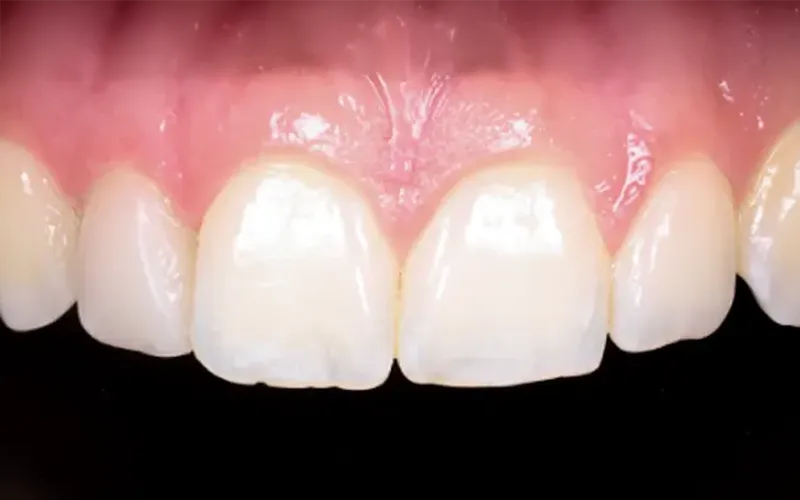
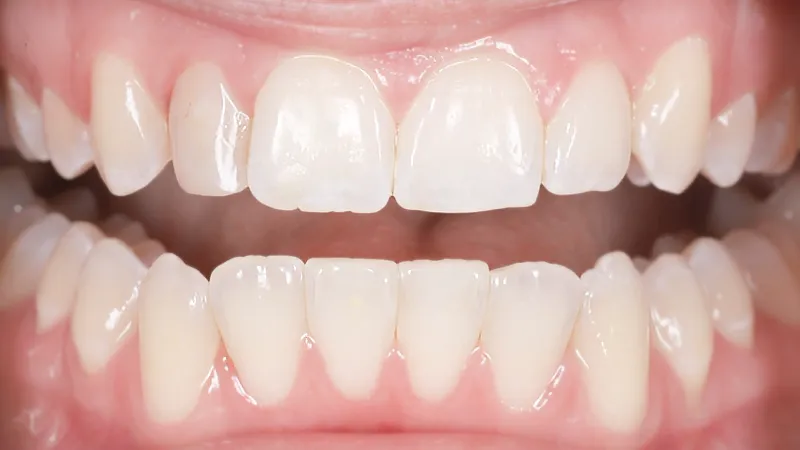
Miss V came to our clinic with an ageing resin veneer on her upper left lateral incisor (tooth 12). Over time, it had darkened and no longer matched the tone or contour of the teeth beside it. A new veneer was placed to improve overall balance and help the tooth blend naturally within her smile.
Clinical assessment
A detailed examination was completed before starting treatment. This involved checking:
- The condition of the existing veneer
- The health and integrity of the natural tooth underneath
- The colour and translucency of the surrounding teeth to guide accurate shade selection
- The most conservative approach to appropriate aesthetic outcome
Miss V’s tooth was found to be healthy, with no signs of decay or structural damage, making it well-suited for replacement with a new resin veneer.
Veneer replacement process
The replacement of Miss V’s veneer was carried out with meticulous attention at each stage:
1. Removing the old veneer – The ageing resin was gently taken away while preserving the natural tooth beneath.
2. Minimal preparation – Only light adjustments were made to the tooth surface to ensure the new veneer would bond securely and align with the adjacent teeth.
3. Shade matching – A resin shade was selected to blend with the colour and translucency of the neighbouring teeth.
4. Layering and shaping – Composite resin was applied in fine layers and carefully sculpted to recreate the natural contour of a lateral incisor.
5. Polishing and finishing – The surface was smoothed and polished to a glossy, enamel-like finish, helping the veneer blend seamlessly with the smile.
Outcome
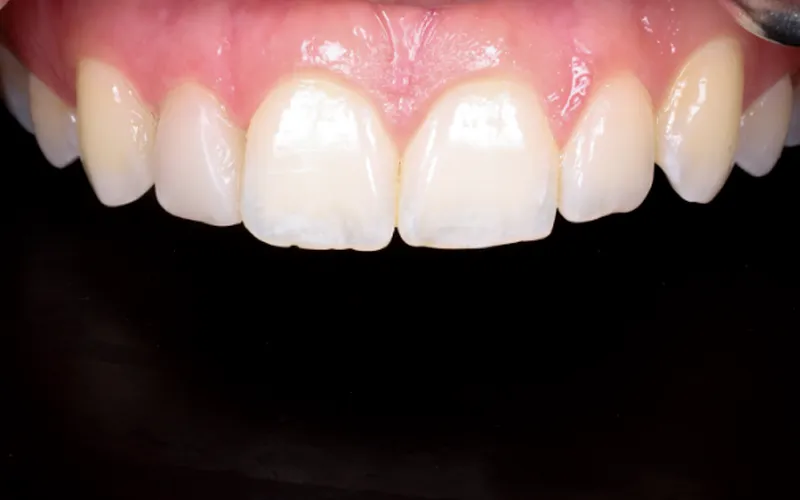
The new resin veneer brought the tooth back into harmony with Miss V’s smile. Its brightness and shape now matched the surrounding teeth, resulting in a more natural-looking appearance for this patient. The treatment was carried out with a minimally invasive approach, allowing the natural tooth to remain intact and well-protected.
When to consider replacing a veneer
Resin veneers can last for many years, but they are not permanent. With time, they may stain, wear down, or become uneven with changes in the surrounding teeth. Oral hygiene and daily habits also play an important role — factors such as teeth grinding, nail biting, or frequent consumption of staining foods and drinks can affect how long a veneer lasts. Regular dental check-ups help monitor their condition, and replacement may be recommended when a veneer no longer blends in or functions as it should.
When old veneers fade, a fresh start can improve visual harmony
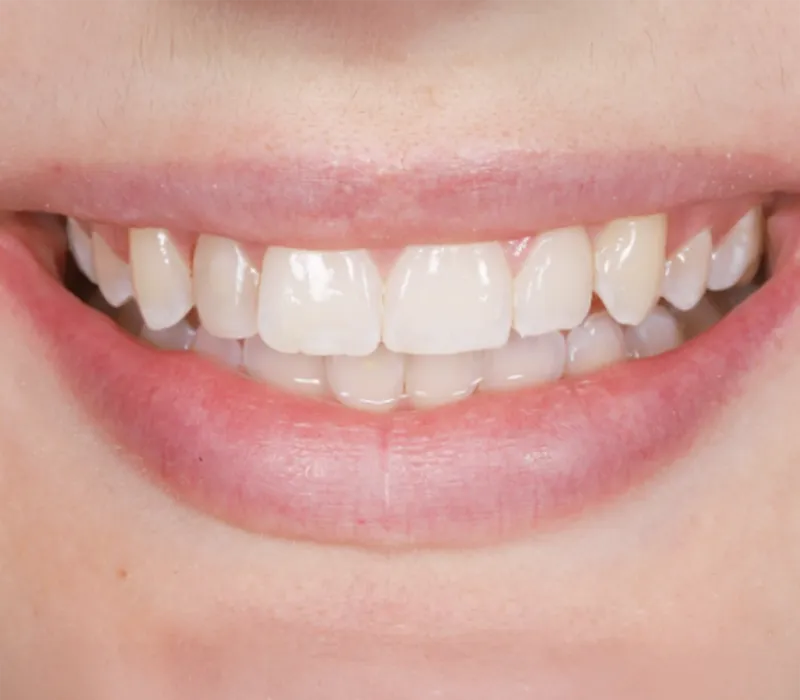
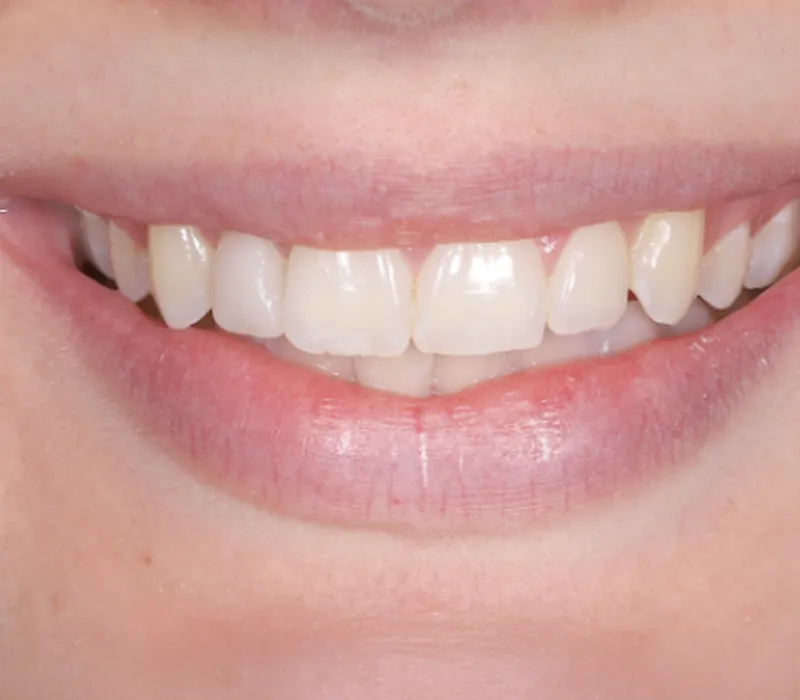
This case highlights how replacing an ageing veneer can refresh the appearance of a single tooth while preserving natural structure. Updating older restorations can help maintain both function and aesthetics through a conservative approach.
If you have existing veneers or concerns about the appearance of your teeth, a dental consultation can provide guidance on the most suitable options for your individual situation.